Production guides
Choose source portraits that preserve recognizable features
A practical guide to checking face size, sharpness, expression, angle, lighting, and occlusion before using a portrait reference.
한국어로 읽기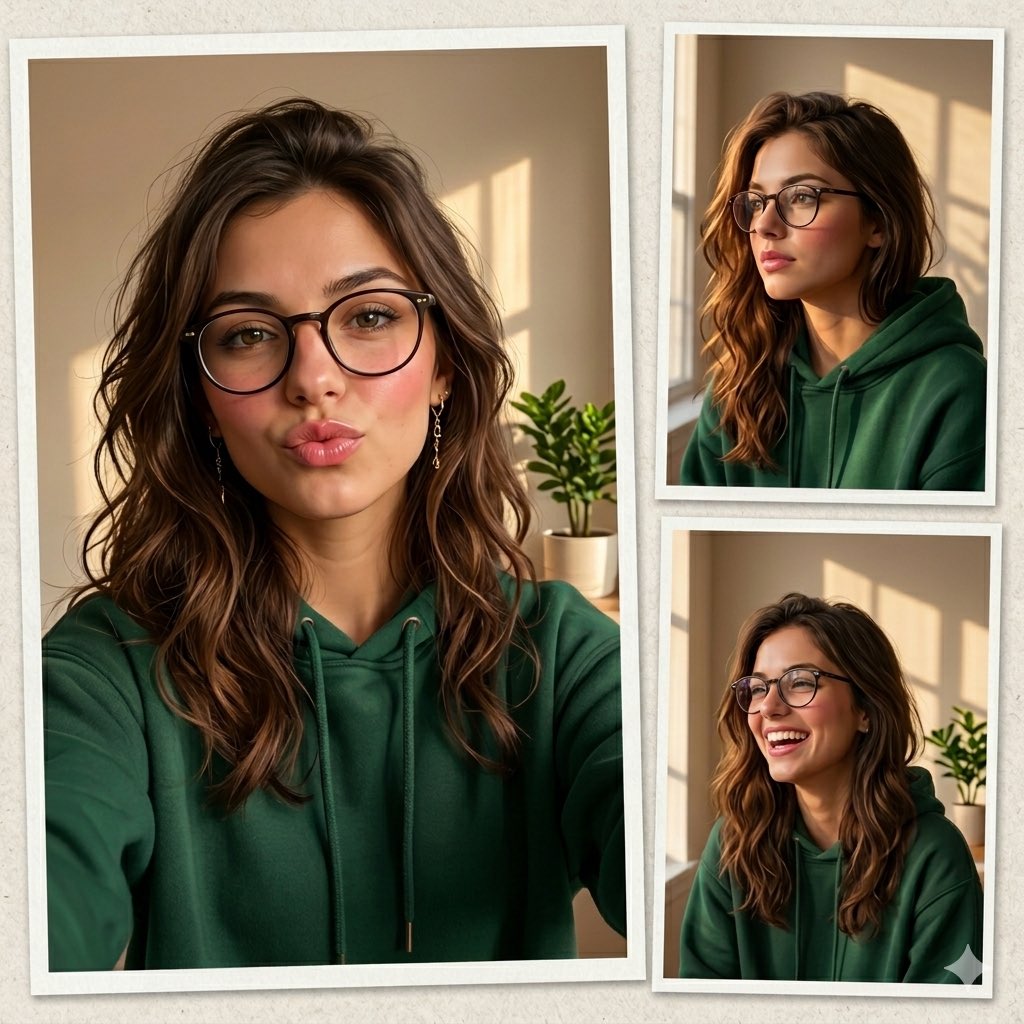
Problem
Small faces, deep shadows, profile angles, and compression can weaken evidence around the eyes, nose, mouth, and jaw needed to compare a generated face with its source.
Outcome
You can select a clearer reference and define concrete face-review criteria before generation begins.
Preparation
- Collect candidates where the face occupies a useful part of the frame.
- Separate frontal views from mild profile views.
- Mark features hidden by hair, glasses, hands, or shadow.
- Crop to a single-person frame while retaining useful resolution around the face.
- Set aside candidates with a strong color cast or backlight that merges skin and hair boundaries.
Decisions
- Primary reference
- Prefer the candidate with clear eye and mouth contours and limited compression artifacts.
- Angle alignment
- Pair a source and template whose face directions do not sharply conflict.
- Feature priority
- Choose between a neutral and extreme expression for the publication context, then decide whether identity cues, expression, or hairstyle matters most.
- Person reference control
- Select the person reference upload in Template setup rather than placing a face photo in the product reference field or relying on prompt text. This control supplies observable identity cues.
- Consent record
- Record whether the reference consent covers the intended channel and publication context, not only possession of the file.
Warnings
- Heavy retouching
- Strong smoothing can remove lines, marks, and contours that help distinguish a face.
- Occlusion and backlight
- Missing eye or jaw detail may be reconstructed differently in the output.
- Likeness permission
- Confirm the relevant person's permission for the intended context before publication.
- Feature drift
- Compare the hairline, glasses frames and lenses, and earrings with the source. Small accessories may disappear or change shape.
- Unintended age change
- Check whether skin texture and facial contours make the person appear materially younger or older than the source.
Pre-publish checklist
- Compare both eye shapes and spacing.
- Inspect nose and mouth contours at a larger view.
- Check that source and template angles are compatible.
- Record every important occlusion.
- Keep a human approval step before publication.
- Compare hairline, glasses, and earrings one by one.
- Check for unintended age changes.
- Confirm reference consent for the intended use.
AI disclosure
AI-generated output can contain errors in facial shape or fine detail, so a person must inspect it before publication.